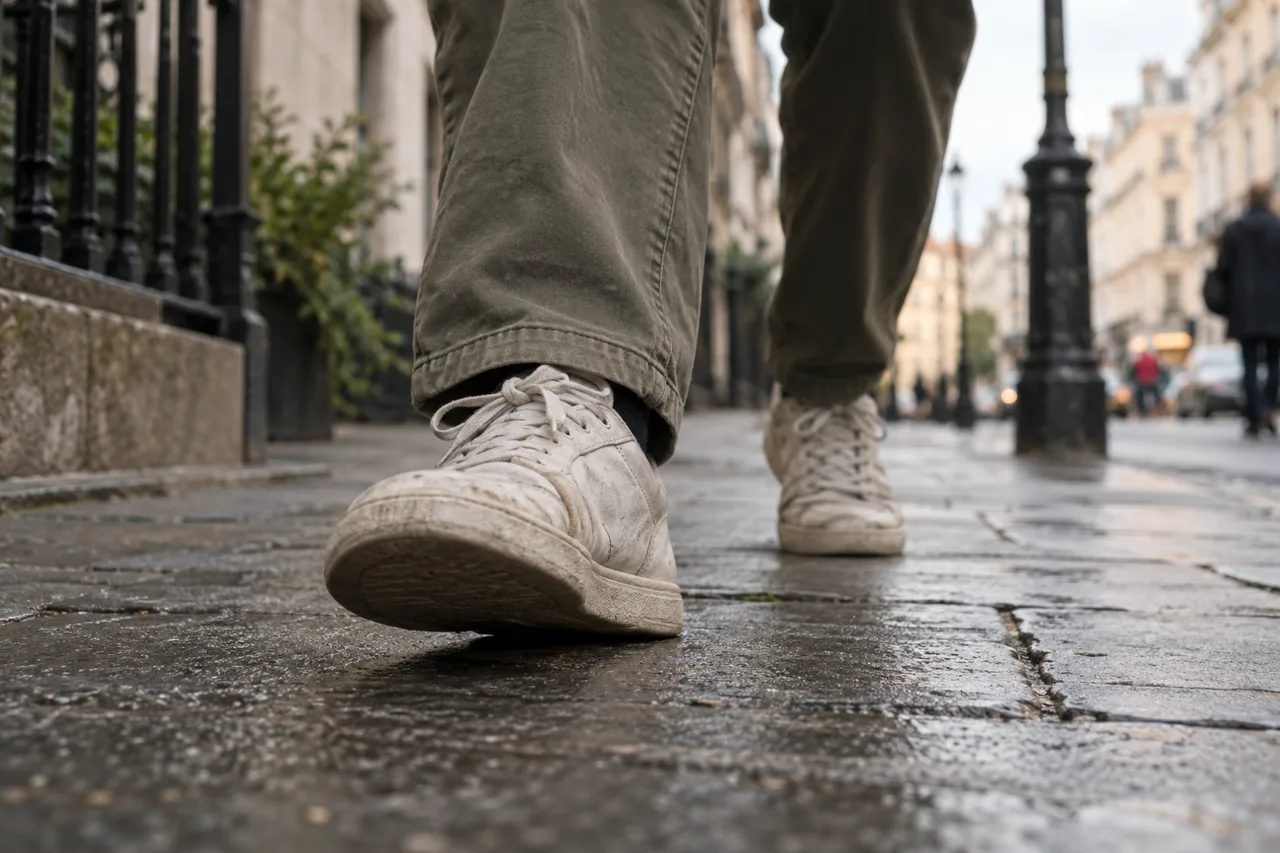
The most useful event shoe is the pair that suits your foot, your route, and the amount of time you will spend in it. A soft insole alone cannot answer those questions. Neither can a label such as walking shoe, comfort flat, or everyday boot. Begin with the pair you already trust, then test it against the day you are planning.
This is a guide to clothing decisions, not a diagnosis or treatment plan. If shoes cause persistent pain, numbness, or a recurring problem, seek advice from an appropriate qualified professional. Do not make enduring discomfort part of the event plan.
Start with a route, not a shoe category
Sketch the journey from your door to your seat and back. Include the less photogenic parts: station corridors, stairs, the walk from parking, and a possible wait after the event. You do not need an exact step count. You need a realistic picture of the surfaces and stretches where you will be on your feet.
A venue’s name tells you little about your actual approach. A nearby garage may still involve several levels, a pedestrian route, or a different exit after the event. Consult the venue’s official arrival information. You can also use event-day parking guides to orient your planning, then confirm the current arrangements with the operator or venue.
If you use a mobility aid or need an accessible route, make those arrangements central to your plan. Do not treat a fashion recommendation as a substitute for checking access. Your footwear decision should support the route you can comfortably use, rather than an assumed route designed around someone else’s needs.
Compare the pair in front of you
A trainer may be familiar and easy to fasten, but inspect its sole and fit rather than assuming the category makes it suitable. A worn pair can behave differently from when it was new. Check for smooth areas on the outsole, damaged seams, or a closure that no longer holds consistently.
A boot can provide coverage and a look you enjoy, but weight, stiffness, and fastening take on more importance over a long day. Try it with the socks you intend to wear. Make sure the trouser hem does not catch on the shaft or collect around the ankle in an uncomfortable way.
A flat can be convenient for a seated evening, yet the shape still has to stay on without constant effort. If your heel slips or your toes work to hold it in place, reconsider. A sandal raises its own questions about straps, surfaces, weather, and how crowded the route will be. No category wins without context.
The home trial: five ordinary movements
First, put on the entire lower half of the outfit, including socks or tights. Walk on a clear indoor surface and notice whether the shoe moves with your foot. There should not be an immediate pressure point that you are already explaining away. Follow any retailer’s return conditions if the shoes are new.
Second, sit down and stand again. Check the top of the shoe and the ankle area. Third, turn gently in each direction. Fourth, use a step or staircase if that is comfortable and appropriate for you. Fifth, stand still for a short while, since waiting can feel different from walking.
These checks are not a guarantee of all-day comfort. They are an opportunity to catch an obvious mismatch before it becomes inconvenient. If you can, wear a familiar candidate pair on an ordinary outing of similar character before the event. A real errand tells you more than another minute in front of the mirror.
The details that change the answer
Socks can alter the feel of a familiar shoe. A thick pair may take up room; a seam may sit where you do not want it; a low-cut style may slide. Use the pair from your trial on the actual day. An event is an inconvenient time to discover that a new sock behaves differently.
Closures should be secure without creating uncomfortable pressure. Check laces, buckles, and zippers before leaving, and adjust them to your own comfort. Do not pack a collection of accessories to compensate for a poor basic fit. If you already use professionally recommended inserts or other supports, account for them when choosing the pair.
Think about your clothes too. A long skirt may need a different hem clearance from cropped trousers. A shoe that works beautifully with one silhouette can make another drag. Practical footwear does not have to dictate a single aesthetic, but it should participate in the final fitting.
When the weather changes the shortlist
Check the forecast for your travel hours. A shoe you like on a dry indoor floor may not be the pair you want for a wet approach. Look at the actual sole and the manufacturer’s information where available. Avoid assuming that a chunky appearance proves reliable traction.
Wet weather also affects hems and spare clothing. If trousers reach the ground, shortening the effective length with a different pair may be more useful than changing the entire shoe plan. Choose an outer layer that lets you move freely, and check our layering guide for changing conditions if you need an adaptable combination.
Heat presents a different comfort question, but the answer remains individual. Coverage, sock choice, ventilation, and the amount of standing all affect how a pair feels. Do not force a shoe into the plan because it is described as a seasonal essential. Use your experience with the actual pair.
Three event scenarios
For a seated theatre evening with a short, confirmed route, you may have room for a dressier pair that you already find comfortable. Try it with the complete outfit and account for the journey home. A taxi reservation does not remove the possibility of a queue or a short walk.
For a standing concert, prioritize the pair you have successfully worn for comparable periods. Consider how it behaves when you shift your weight, stand close to other people, and leave through a crowded exit. Our concert outfit planning guide connects that decision to layers, bags, and the time spent waiting outside.
For a large stadium, think beyond the distance on a map. Ramps, steps, circulation routes, and crowd movement can make the approach feel longer than expected. Choose the pair that leaves you enough attention for the event itself. There is little style benefit in spending the return journey watching every uncomfortable step.
What belongs in a small backup plan
A backup begins with information. Know your transport options and avoid relying on a route you have not checked. If you bring any personal comfort items, make sure they are permitted and useful to you. Do not assume you can carry a second pair of shoes into every venue or store them under a seat.
If a pair starts causing discomfort during the event, take an appropriate opportunity to stop and reassess. Adjusting a closure may address a simple issue, but persistent symptoms deserve attention. There is no prize for forcing an outfit through the entire evening unchanged.
The final choice should feel almost uneventful: a familiar pair, a route you understand, and clothes that work with both. Let the rest of the outfit provide the visual interest. Your shoes have a long shift ahead of them.
Practical guidance to adapt to your own needs. Check event requirements with the organizer. Read our editorial standards.